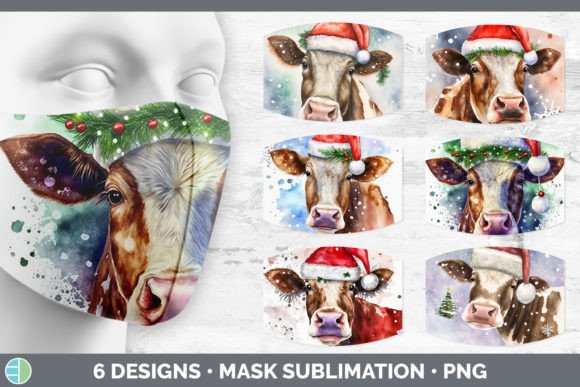
Reviewing the Christmas Rousing Background Design
As a designer who has spent years staring at digitized files and watching needles punch through fabric, I have learned that not every pretty picture translates into a quality machine embroidery design. When I first opened the file for Christmas Rousing Background, my initial reaction was one of cautious optimism. It sits firmly in the category of Illustrations, which often means high detail and complex layering. For an embroidery enthusiast or a small business owner, this presents both an opportunity and a challenge. The key is determining whether this specific asset can survive the transition from screen to stitch without losing its charm or compromising the integrity of the garment.
First Impressions and Visual Mood
The immediate mood of Christmas Rousing Background is festive yet sophisticated. It does not rely on the cliché, blocky graphics we often see in low-quality holiday batches. Instead, it offers a narrative quality. The layout suggests movement and depth, which is crucial for keeping the viewer’s eye engaged. However, from a technical standpoint, "background" elements in embroidery are tricky. They are meant to support, not overwhelm. If the stitch density is too high, you end up with a stiff, cardboard-like patch on your fabric. If it is too low, the underlying fabric shows through, ruining the illusion.
In this review, I am looking at how this design functions as a foundational element. Does it provide enough texture to be interesting on its own, or is it strictly a backdrop for monograms and names? My assessment is that it strikes a balance, but it requires careful handling. The visual personality is warm and inviting, making it an excellent candidate for products that aim to evoke nostalgia and comfort.
Real-World Application: The Holiday Tote Bag Test
To truly evaluate a design, you must imagine it on a physical product. Let’s consider a common scenario for many Etsy sellers and crafters: creating a custom holiday tote bag. Canvas is a sturdy fabric, but it has a distinct weave. I envisioned stitching Christmas Rousing Background onto a natural cotton canvas tote. The goal was to create a reusable gift bag or a stylish shopper for holiday markets.
The result, theoretically, depends heavily on the thread colors chosen. Because this is an illustration-style piece, it likely utilizes gradients or varied tones. On a light canvas, using slightly darker threads for the outline and softer tones for the fill would create a beautiful, vintage-inspired look. However, if the design includes fine lines, they might get lost in the texture of the canvas. This is where the choice of stabilizer becomes non-negotiable. A cut-away stabilizer would be essential here to prevent the fabric from puckering under the weight of the stitches, ensuring the finished product looks professional rather than homemade in a negative sense.
Apparel and Custom Sweatshirts
Moving from accessories to apparel, let’s discuss sweatshirt embroidery. Fleece and French terry are popular bases for holiday gear. The challenge here is the pile of the fabric. If Christmas Rousing Background features intricate running stitch details or tiny text, these will disappear into the fuzz of a sweatshirt. For this application, I would recommend using the design as a larger chest piece or a full-back print, where the scale allows the details to breathe.
For a personalized gift, such as a family matching set, this design could serve as the unifying element. Imagine the background stitched in white or cream on a deep red or forest green hoodie. The contrast would make the illustration pop. However, one must be wary of the hoop size. If the design is large, you need a machine capable of handling a 5x7 or larger hoop. Trying to shrink a detailed illustration into a 4x4 hoop for a pocket placement will likely result in a muddy, indistinguishable blob of thread.
Navigating Technical Challenges
While the aesthetic appeal is strong, we must address the practical limitations. Any designer worth their salt knows that fill stitch areas can be problematic on stretchy fabrics. If you are planning to use this on a baby onesie for baby embroidery, you must proceed with caution. Babies move, and their clothes are washed frequently. A dense background design can restrict the stretch of the knit fabric, leading to discomfort and potential seam distortion.
Furthermore, consider the issue of curved surfaces. Embroidering on a cap or hat requires a different approach than flat goods. If Christmas Rousing Background is wide, it may not wrap well around the front panel of a baseball cap. In such cases, it is better suited for flat items like pillow covers, tea towels, or wall hangings. For kitchen textiles, ensure that the threads used are colorfast and that the design does not interfere with the functionality of the towel. No one wants a bulky embroidery patch rubbing against their hands while drying dishes.
Fabric and Thread Considerations
The success of this embroidery file hinges on the interaction between thread and fabric. On dark fabrics, you might need an underlay of white thread to make the colors vibrant, which adds bulk. On thin fabrics like silk or lightweight cotton, the tension must be adjusted perfectly to avoid pulling. I always advise testing the design on scrap fabric first. Check the stitch density by holding the stitched sample up to the light. If you see pinholes or excessive stiffness, the density is too high for that particular material.
Also, consider the applique design potential. If the background allows for it, combining stitched elements with fabric applique can reduce stitch count and add texture. This is a great strategy for commercial embroidery where production time equals money. Reducing the number of stitches while maintaining visual impact is a skill that separates hobbyists from professionals.
Business Value and Brand Consistency
For small shop product creators, consistency is key. Using a high-quality illustration like Christmas Rousing Background can elevate your brand perception. It signals to customers that you care about detail and quality. When you list these items on platforms like Etsy, the visual appeal of the mockup drives clicks. A well-stitched, clean design photographs better, leading to higher conversion rates.
However, remember that licensing matters. Before selling any handmade product featuring this design, confirm the license terms. Some digital assets are for personal use only, while others allow for commercial sales up to a certain quantity. Ignoring this can lead to legal issues down the line. Always verify if the digital embroidery file includes the rights for commercial use, especially if you are producing items for sale.
Final Verdict and Designer Notes
In conclusion, Christmas Rousing Background is a versatile asset for the right project. It shines in scenarios where space allows for detail, such as tote bags, pillow covers, and adult apparel. It requires a thoughtful approach to stabilizer selection, thread choice, and fabric compatibility. It is not a "plug-and-play" solution for every surface; it demands respect for the mechanics of embroidery.
- Test First: Always stitch out on scrap fabric identical to your final product.
- Check Density: Ensure the fill stitches are not too dense for knits or delicate wovens.
- Contrast Matters: Use high-contrast thread colors for visibility on textured fabrics.
- Hoop Size: Match the design size to an appropriate hoop to maintain detail clarity.
- Licensing: Verify commercial rights before selling finished goods.
By treating this design as a serious component of your production workflow, you can create stunning holiday embroidery pieces that customers will cherish. It is a solid addition to your library of design assets, provided you apply the necessary technical scrutiny. Happy stitching.