Review: A Set of Christmas Candies for Holiday Embroidery
As a designer who spends more time staring at stitch simulations than actual holiday decorations, I approach every new machine embroidery design with a mix of optimism and skepticism. When I first opened the files for A Set of Christmas Candies, my immediate reaction was one of nostalgic warmth. This isn't just a generic holly leaf or a standard snowflake; it is a collection that captures the whimsical spirit of the season through the lens of classic confectionery. For those of us in the craft business looking to expand our holiday embroidery offerings beyond the usual suspects, this set offers a fresh visual personality that feels both vintage and modern.
First Impressions and Visual Mood
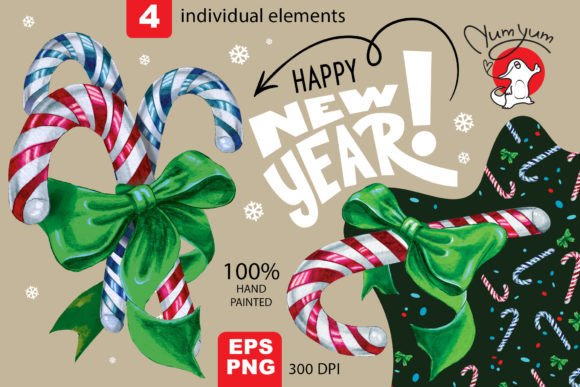
The layout of A Set of Christmas Candies immediately suggests versatility. The illustrations within the set rely on clean lines and balanced shapes, avoiding the trap of over-complication that often plagues seasonal designs. Whether you are working with a satin stitch for smooth, glossy finishes on the candy wrappers or utilizing a fill stitch to create texture on peppermint swirls, the digitizing appears thoughtful. The mood is playful yet sophisticated, making it suitable for a wide range of demographics, from children's wear to upscale boutique home decor.
What stands out most is the clarity of the shapes. In the world of digital embroidery file evaluation, we often worry about how small details translate to thread. Here, the distinction between different candy types is clear without relying on microscopic running stitch details that might break or fray after a single wash. The color palette implied by the design—classic reds, whites, greens, and metallic accents—lends itself beautifully to traditional Christmas themes while remaining flexible enough for unique colorway experiments.
Real-World Application: The Custom Tote Bag Scenario
To truly test the viability of any design, I mentally place it into a real-life production scenario. Imagine a client requesting a limited run of reusable shopping bags for a local bakery's holiday promotion. They want something cheerful but not childish. A Set of Christmas Candies fits this tote bag design brief perfectly. Placed centrally on a natural canvas bag, a cluster of these embroidered candies creates an instant focal point.
In this context, the stitch density becomes a critical factor. Canvas is a sturdy fabric, but if the density is too high, the bag could become stiff or pucker around the hoop area. Based on the visual weight of the design, it seems robust enough to hold its own on heavy fabric without requiring excessive underlay that adds bulk. For a small shop product like this, the finished look needs to scream quality. The clean edges of the candy shapes suggest a professional finished product that enhances brand consistency rather than detracting from it.
Alternatively, consider sweatshirt embroidery. A cozy, oversized crewneck featuring a single, large candy cane or a scattered arrangement of sweets on the sleeve creates a trendy, streetwear-inspired holiday look. The design scales well, maintaining its integrity whether enlarged for a back piece or minimized for a chest logo. This adaptability is crucial for Etsy sellers who need to maximize the utility of a single purchase across multiple product lines.
Navigating Fabric Challenges and Hoop Constraints
While the design shows promise, practical application requires caution. Not every fabric plays nice with every digitizing style. If you are attempting baby embroidery on a soft, stretchy onesie, you must be mindful of the stabilizer choice. The structured nature of candy illustrations might feel too rigid on delicate knits if not properly supported. A cut-away stabilizer would likely be necessary to prevent distortion over time, ensuring the personalized gift remains wearable after repeated laundering.
Furthermore, curved surfaces present their own hurdles. Applying these designs to caps or hats requires careful attention to the hoop size and the curvature of the brim. If the design includes fine text or intricate wrapper details, these areas might compress or distort on a curved surface. It is always advisable to run a test stitch-out on a scrap piece of the actual garment material. This is especially true for dark fabrics; while the contrast of white peppermint against black fabric is striking, you must ensure your thread colors provide sufficient coverage so the base fabric doesn't peek through the fill areas.
Commercial Viability and Brand Trust
For commercial embroidery projects, the perceived value of the item is directly tied to the quality of the decoration. A Set of Christmas Candies has the potential to elevate a simple tea towel or apron into a premium handmade product. Customers are increasingly discerning; they can spot a low-resolution or poorly digitized design from a distance. A crisp, well-executed embroidery job builds trust and encourages repeat business.
When creating printable mockup assets for online listings, the distinct shapes in this set render beautifully in digital previews. This helps in marketing the custom apparel or home goods before they are even stitched, allowing buyers to visualize the end result clearly. However, remember that a mockup is only as good as the actual stitch-out. Consistency between your digital presentation and the physical item is key to maintaining a strong reputation as a creative entrepreneur.
Essential Designer Notes for Success
Before committing to a full production run, there are several technical checks every professional should perform. First, verify the specific file formats included in the download to ensure compatibility with your machine. While the visual appeal is high, technical compatibility is non-negotiable. Second, pay close attention to the licensing terms. Just because a design is beautiful doesn't automatically grant rights for unlimited commercial use; always confirm whether you can sell the embroidered patch, the finished garment, or if the license restricts you to personal use only.
- Test on Scrap: Always stitch a sample on the exact fabric type you intend to use for the final product to check for puckering or pull.
- Check Contrast: Review how the design looks in black and white to ensure the shapes remain distinct without relying solely on color differences.
- Inspect Density: Look for areas where stitches might be too dense, which can cause needle breakage or fabric stiffness.
- Confirm Hoop Requirements: Ensure your equipment can accommodate the largest design in the set without re-hooping, which can lead to alignment issues.
- Evaluate Washability: Consider how the design will hold up after washing, particularly if selling items that require frequent cleaning like kitchen towels or baby clothes.
In conclusion, A Set of Christmas Candies represents a solid addition to a designer's library. It bridges the gap between festive fun and professional aesthetics. Whether you are decorating nursery decor, creating wedding gifts with a holiday twist, or stocking up for a craft fair, this set offers the flexibility and charm needed to create standout items. By approaching the project with careful preparation and an eye for detail, you can transform these digital assets into tangible treasures that customers will love.