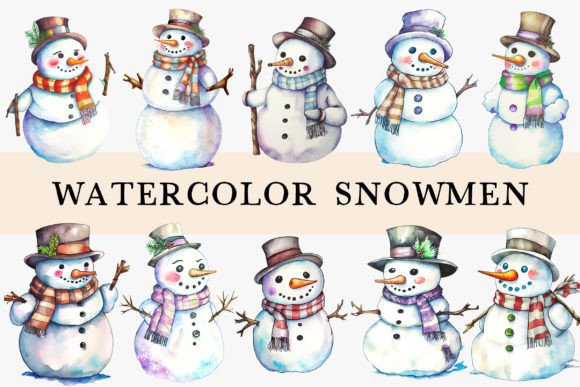
Reviewing Christmas Snowman Cliparts for Embroidery
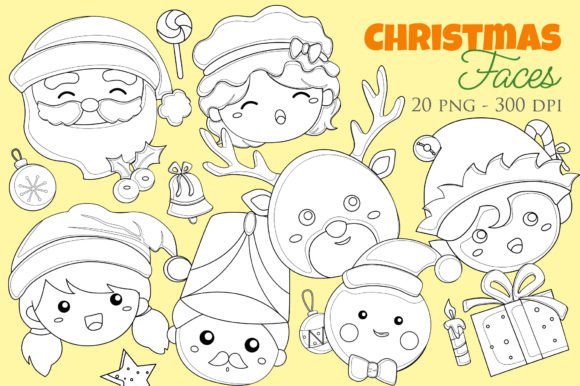
As a designer who spends more time staring at stitch simulations than actual snow, I approach every new Christmas Snowman Cliparts set with a mix of curiosity and caution. We have all seen those generic, blocky holiday graphics that look fine on a screen but turn into a tangled mess of thread on fabric. When I pulled up this specific collection of Illustrations, my first goal was to determine if these were merely decorative digital assets or viable candidates for a professional machine embroidery design workflow.
The initial visual impression is surprisingly warm. Unlike the sterile, vector-perfect lines often found in stock libraries, these cliparts possess a hand-drawn charm that translates well to textile arts. The mood is nostalgic rather than commercial, which is a critical distinction for Etsy sellers and boutique owners trying to stand out in a saturated market. For a holiday embroidery project, personality sells. A stiff, corporate-looking snowman rarely inspires the same emotional connection as one that feels whimsical and approachable. These designs hit that sweet spot, offering enough detail to be interesting without becoming a nightmare to stitch.
Real-World Application: The Tote Bag Test
To truly evaluate the utility of these assets, I imagined a common scenario for a craft business: preparing a custom order for a local bakery’s holiday merchandise. The client wanted a run of canvas tote bag design prototypes featuring festive motifs. I selected one of the simpler snowman figures from the Christmas Snowman Cliparts series to test its viability.
Canvas is a forgiving fabric, but it has a distinct weave that can swallow fine details. I noted that the thicker outlines in these illustrations would likely hold up well against the texture of the material. If I were converting this clipart into an embroidery file, I would prioritize a bold satin stitch for the borders to ensure the shape remains crisp. The internal details, such as the scarf patterns or button placements, would need careful handling. Using a fill stitch for larger areas like the snowman’s body could add nice dimension, but I would keep the stitch density moderate to prevent the fabric from puckering. This balance is what separates a amateur-looking finished product from a professional one.
Versatility Across Products
One of the strongest aspects of this collection is its adaptability. While my initial test was on a tote, these designs are versatile enough for various custom apparel items. For sweatshirt embroidery, the softer, fuzzier texture of fleece requires designs with less intricate negative space. The bolder shapes in these cliparts work in your favor here. A large, central snowman motif on a crewneck sweatshirt becomes a statement piece, ideal for family matching sets or corporate holiday gifts.
However, context matters. When considering baby embroidery, such as on a onesie or a soft blanket, the scale becomes paramount. You cannot simply shrink a complex illustration down to fit a small chest area. For these smaller applications, I would isolate the simplest elements from the Christmas Snowman Cliparts—perhaps just the head or a minimalistic silhouette. This ensures the design remains legible and does not become a dense clump of thread that might irritate sensitive skin. Similarly, for an embroidered patch, the design needs strong, closed shapes to allow for clean cutting and merrowed edges. These illustrations provide clear boundaries, making them excellent candidates for patch creation.
Navigating Technical Challenges
While the aesthetic appeal is high, a responsible designer must address the technical limitations. Not every clipart is ready for immediate stitching. If you are working with dark fabric, you must consider how the thread colors will pop. Some of the subtler shading in these illustrations might get lost on navy or black textiles. In such cases, adding a white underlay or choosing high-contrast thread palettes is essential.
Another critical consideration is the hoop size. Many of these cliparts are designed with a square or portrait orientation in mind. Fitting them into a standard 4x4 inch hoop might require cropping or simplifying the design. Always check the aspect ratio before committing to a digitizing process. Furthermore, if you are applying these to curved surfaces like caps, the distortion factor increases. A wide, horizontal snowman design might warp uncomfortably around the front panel of a hat. In these instances, opting for a taller, narrower composition from the set yields better results.
For items that require frequent washing, such as kitchen towels or aprons, the integrity of the stitch is vital. Dense areas in the original illustration should be converted to lighter fill patterns or even running stitch outlines to reduce bulk. This not only improves the drape of the fabric but also enhances the durability of the handmade product. No customer wants a stiff, cardboard-like patch on their soft tea towel.
Commercial Value and Brand Consistency
From a business perspective, using high-quality design assets like these directly impacts perceived value. Customers can sense the difference between a lazy, auto-digitized job and a thoughtfully executed design. When you use charming, cohesive Illustrations for your small shop product line, you build brand consistency. Whether you are creating printable mockup images for your online store or producing physical inventory, the visual language remains consistent.
These cliparts also serve as excellent base layers for mixed-media projects. You might combine the embroidered snowman with hand-stitched French knots for snowflakes, adding a tactile layer that machines cannot replicate. This hybrid approach elevates the item from a simple commodity to a unique personalized gift. For commercial embroidery clients, offering this level of customization can justify higher price points and foster deeper customer loyalty.
Practical Designer Notes
Before you rush to digitize or purchase the corresponding digital embroidery file, take a moment to plan. Here is my checklist for working with this type of artwork:
- Test on Scrap Fabric: Always stitch a sample on the same material you intend to use for the final product. Fabric tension and texture vary wildly.
- Check Contrast: View the design in grayscale. If the details disappear in black and white, they will likely get lost in stitching too.
- Verify Licensing: Ensure you have the right to use the clipart for commercial goods. Just because it is cute does not mean it is free to sell.
- Stabilizer Selection: Match your stabilizer to your fabric. Cut-away for stretchy knits, tear-away for stable wovens. This is non-negotiable for clean results.
- Simplify Complex Areas: Do not be afraid to edit the design. Remove tiny details that do not translate well to thread.
In conclusion, Christmas Snowman Cliparts offers a solid foundation for holiday-themed projects. It bridges the gap between digital illustration and tactile craft. By approaching these designs with a critical eye for stitch mechanics and fabric behavior, you can transform simple graphics into cherished heirlooms. Whether you are an experienced decorator or a hobbyist looking to upgrade your embroidery project game, these assets deserve a spot in your creative toolkit. Just remember: the best design is not just what looks good on the screen, but what feels right in the hand.